Boarding and Better Behavior: What to Discuss Before Booking
Understand the difference between ordinary boarding and formal training, and plan clear goals, methods, owner practice and appropriate care.

Boarding and training answer different needs. General boarding provides care while you are away; a training program adds agreed learning goals and professional instruction. Do not expect a standard stay to deliver better leash manners, lasting confidence or relief from anxiety.
If you want to protect existing routines or work toward a new skill, discuss that goal before booking. Here is what to clarify.

Know Which Service You Are Booking
Howliday’s general boarding includes daycare. Formal board and train is a separate service with Standing Obeytion Dog Training and includes daily training.
Sharing a building with trainers does not make every boarding stay a training program. Confirm the service, scope and price in writing.
Share Existing Skills and Instructions
Tell caregivers which cues your dog knows, how you use them and any relevant handling instructions. Ask which parts of that routine they can follow during ordinary care.
Do not assume staff will teach new skills or follow a complete training curriculum unless those services have been agreed.
Keep Activity and Learning Goals Distinct
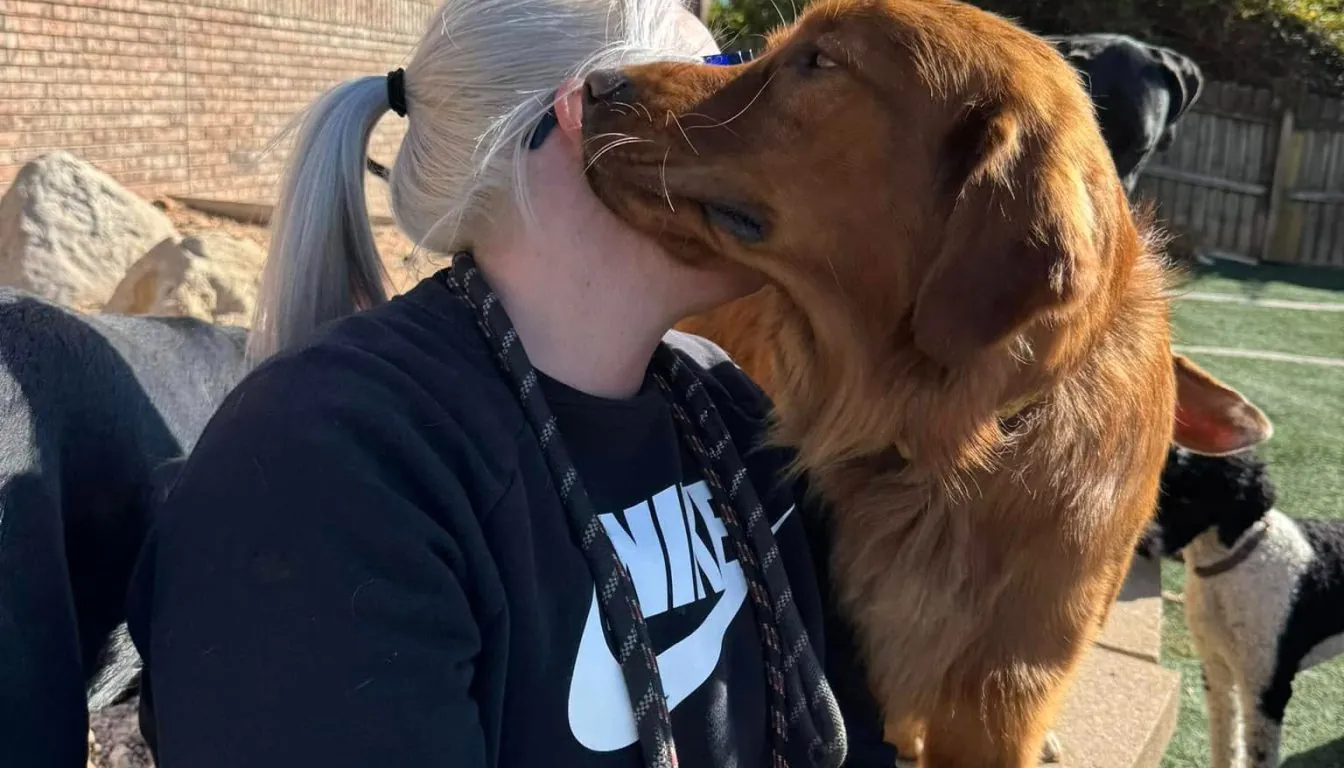
Howliday describes supervised playgroups matched by size and personality. Discuss suitability and confirm available alternatives if needed.
Group play and enrichment are not guarantees of better behavior at home. Avoid relying on other dogs to teach manners or using a busy schedule as treatment for fear or distress.
Define Progress Before Training Begins
Choose concrete goals with the trainer, such as a particular greeting routine or a walking skill in an agreed setting. Record the starting point and ask how progress will be shown.
A broad promise to return a “better dog” is difficult to evaluate. Ask what remains to be practiced and what would lead the trainer to change the plan.
Discuss Methods and Suitability
The American Veterinary Society of Animal Behavior recommends reward-based training. Ask the trainer to explain the methods and equipment proposed for your dog before enrolling.
Share relevant health and behavior history. Significant fear, aggression or sudden changes need appropriate professional assessment, not an assumption that extra boarding will resolve them.
Plan the Transition Home
Ask for a demonstration, written practice instructions and the scope of any follow-up. Make sure household members understand the same cues and plan.
Results should be reviewed in the situations where you need the skill. No stay length establishes that a behavior will work permanently in every setting.
Review Care Alongside Training
Confirm meals, rest, activities, medication and overnight coverage. Howliday uses remote monitoring overnight; ask how concerns lead to hands-on response.
At pickup, review care observations separately from training progress. Seek veterinary advice about concerning changes rather than assuming unusual tiredness proves successful learning.
Choose the Appropriate Program
Compare board and train, day training and private lessons. Call (417) 771-5221 to discuss suitability, goals, current availability and the complete quote with Howliday and Standing Obeytion Dog Training.