Is Group Play Right for Your Dog in 2026? Signs to Look For
Not every dog loves group play. Learn the signs that show whether group daycare is right for your dog in 2026.

Group play has become a cornerstone of modern dog daycare and boarding—but it isn’t a one-size-fits-all experience. In 2026, responsible pet resorts and informed pet parents understand an important truth: group play is beneficial only when it’s right for the individual dog.
At Howliday Inn Pet Resort, group play is never assumed. It’s thoughtfully evaluated, carefully supervised, and always optional. This approach not only protects dogs—it educates pet parents and ensures positive, enriching experiences.
If you’ve ever wondered whether group play is the right choice for your dog, this guide will help you understand the signs, benefits, and considerations that matter most.
What Group Play Really Means in 2026
Group play in 2026 looks very different from the chaotic free-for-all environments of the past.
Modern group play includes:
- Structured play sessions
- Carefully matched dogs by size, temperament, and energy
- Trained staff supervising every interaction
- Built-in rest breaks to prevent overstimulation
When done correctly, group play supports social skills, mental enrichment, and emotional balance.
Why Group Play Isn’t Right for Every Dog
Just as people have different personalities, dogs do too.
Some dogs thrive in social environments, while others prefer calm, one-on-one interaction. Neither is “better”—they’re simply different needs.
Recognizing this distinction protects dogs from stress, fear, or burnout.
Signs Your Dog May Thrive in Group Play
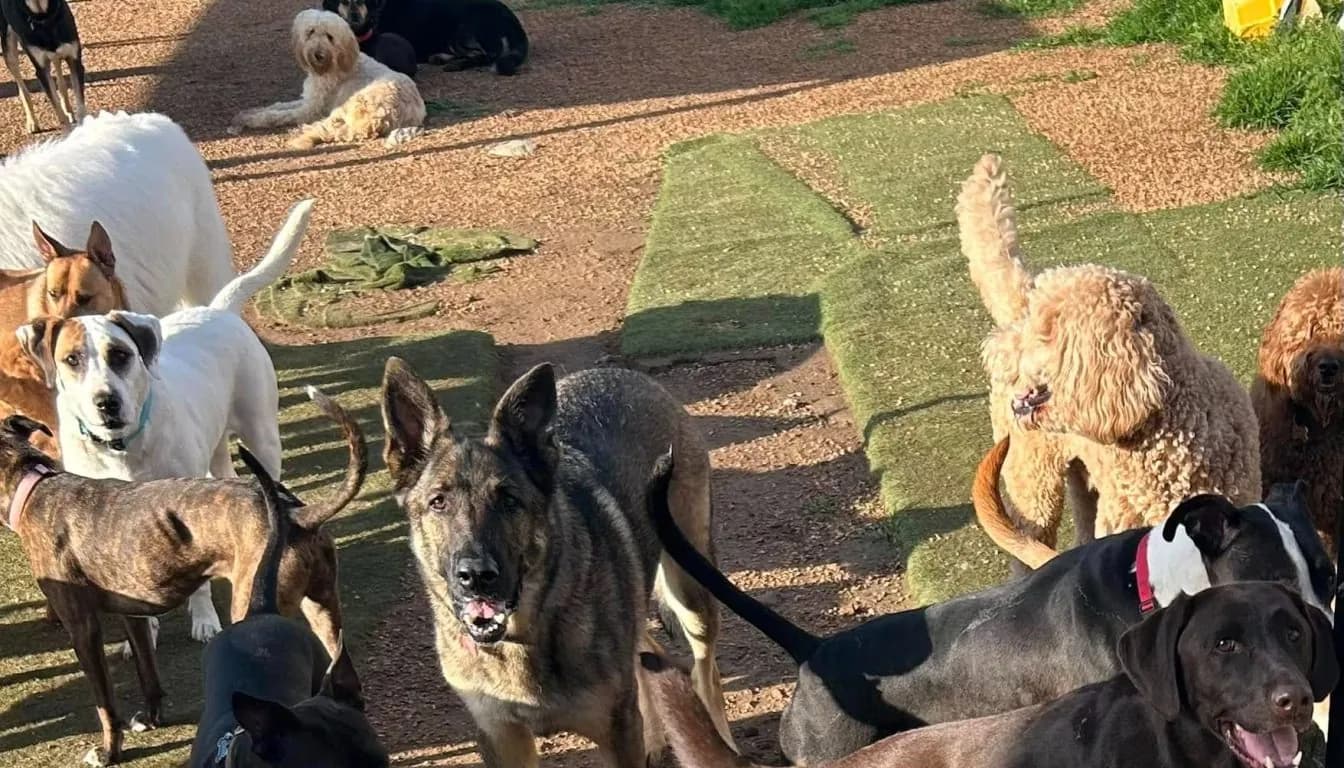
Dogs well-suited for group play often display the following traits:
- Positive Body Language
- Loose, wiggly movements
- Relaxed facial expressions
- Play bows and appropriate pauses
These signals indicate comfort and enjoyment around other dogs.
- Curiosity Without Overwhelm
Dogs that approach other dogs calmly and disengage easily when needed often do well in group environments.
- Energy That Matches Social Play
Moderate, playful energy—not frantic or overly intense—is ideal for group play. These dogs enjoy interaction without becoming overstimulated.
- Recovery after Excitement
Dogs who can settle down after play sessions demonstrate emotional regulation, a key factor in successful group play.
Signs Group Play May Not Be the Best Fit
Group play may not be appropriate if your dog shows:
- Stiff posture or freezing around other dogs
- Excessive barking, hiding, or avoidance
- Resource guarding behaviors
- Difficulty disengaging or calming down
- Signs of stress such as yawning, lip licking, or pacing
These behaviors don’t mean a dog is “bad” or unsocial—they simply signal different needs.
Puppies vs. Adult Dogs: Age Matters
Puppies
Young dogs often benefit from group play when:
- Sessions are short
- Groups are small
- Supervision is constant
Proper puppy play supports social development without overwhelming young dogs.
Adult Dogs
Adult dogs may be selective about their play partners. Respecting preferences leads to healthier social experiences.
Senior Dogs and Group Play
Senior dogs may enjoy social time—but usually at a slower pace.
In 2026, responsible group play for seniors focuses on:
- Gentle interaction
- Calm companions
- Optional participation
At Howliday Inn, seniors are never pressured to keep up with younger dogs.
The Role of Temperament Testing
Temperament testing is the foundation of safe group play.
It helps caregivers understand:
- Comfort levels around other dogs
- Play style and tolerance
- Stress thresholds
Howliday Inn uses temperament evaluations to ensure group play is positive, not risky.
Why Supervision Is Non-Negotiable
Even compatible dogs need oversight.
Professional supervision ensures:
- Early intervention before conflicts escalate
- Balanced play and rest cycles
- Protection for shy or lower-energy dogs
Unsupervised group play increases risk—trained supervision reduces it.
Group Play vs. Enrichment-Based Alternatives
Group play is just one form of enrichment.
For dogs that prefer less social interaction, alternatives include:
- One-on-one play
- Mental enrichment activities
- Calm exploration walks
- Structured rest with human interaction
At Howliday Inn, enrichment is tailored to the dog—not the trend.
Questions Pet Parents Should Ask in 2026
Before enrolling your dog in group play, ask:
- Is group play optional?
- How are dogs matched?
- What training does staff receive?
- How are stress signals handled?
- Are rest breaks built in?
Facilities that welcome these questions prioritize safety and well-being.
How Howliday Inn Approaches Group Play
At Howliday Inn Pet Resort, group play is:
- Thoughtfully evaluated
- Carefully supervised
- Matched by temperament, size, and energy
- Balanced with rest and enrichment
We believe dogs should enjoy their day—not endure it.
Group Play as a Tool—Not a Requirement
In 2026, the best pet care providers understand that success isn’t measured by how many dogs are playing together.
It’s measured by:
- Relaxed body language
- Positive social experiences
- Emotional well-being
- Safe, happy dogs
Group play is one tool among many—and it’s used intentionally.
Final Thoughts: Listening to Your Dog Matters
Your dog will tell you what they need—through body language, behavior, and energy.
Understanding whether group play is right for your dog allows you to make informed, compassionate choices.
Not sure if group play is the right fit? Howliday Inn Pet Resort delivers personalized care through expert temperament testing and enrichment programs tailored to each dog’s needs.