5 Common Mistakes Dog Owners Make When Preparing for CGC (Canine Good Citizen)
Prepare for CGC by avoiding five common training mistakes, practicing clear handling and choosing suitable support at Howliday Pet Resort near Springfield.
Training your dog to become a Canine Good Citizen (CGC) is one of the best things you can do for your furry companion—and for yourself. The American Kennel Club’s CGC program isn’t just a badge of honor; it’s a foundation for better manners, confidence, and communication between you and your pup.
At Howliday Pet Resort, our CGC class helps owners prepare for the evaluation. Preparation takes patience and consistent practice; a passing result is not guaranteed.
If you’re getting your dog ready for their CGC evaluation, it’s essential to know what pitfalls to avoid. Here are the five common mistakes dog owners make when preparing for the CGC—and how you can set your dog up for success.
1. Skipping the Basics: Building on an Unsteady Foundation
Many owners jump straight into CGC-level exercises—like polite greetings or loose-leash walking—without first ensuring their dog can respond to the fundamentals.
The CGC test evaluates ten specific behaviors, from sitting politely for petting to staying calm amid distractions. But if your dog isn’t consistent with basic obedience commands such as sit, stay, come, and leave it, more practice may be needed before adding distractions.
What to Do Instead
Start by strengthening the basics.
Work on short, focused training sessions (5–10 minutes) in low-distraction environments. Once your dog responds reliably, gradually increase distractions—like practicing in the backyard, then at a park, then near other dogs.
At Howliday Pet Resort, we encourage owners to treat basic obedience as the “grammar” of dog training—because without grammar, you can’t form good sentences. Your dog needs that foundation to communicate clearly and confidently during the CGC test.
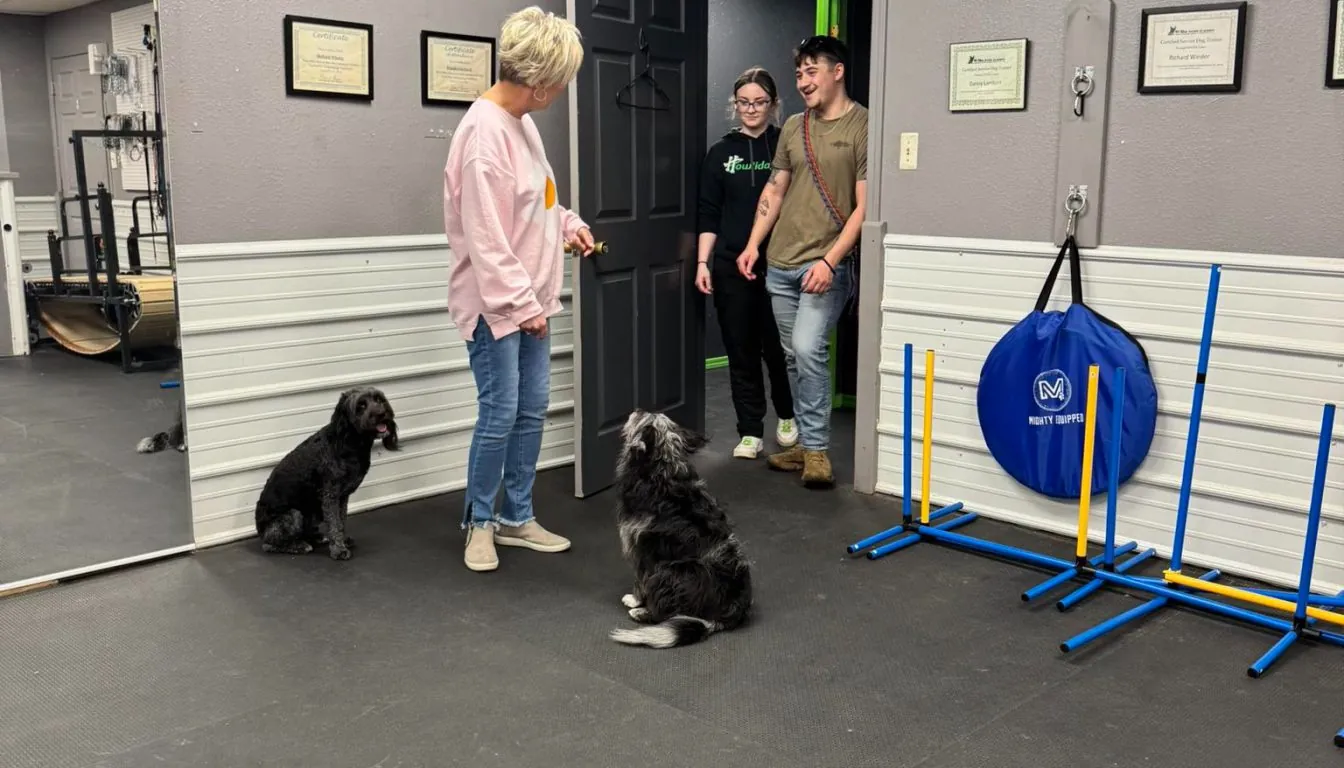
2. Ignoring Real-World Socialization
Socialization isn’t just about letting your dog meet other dogs—it’s about exposing them to the real world safely and positively. Unfortunately, many owners assume their dog is socialized simply because they play well at home or in a fenced yard.
The CGC test includes challenges like calmly walking through a crowd, reacting appropriately to other dogs, and handling distractions like noise or movement. If your dog isn’t used to these scenarios, even a well-trained pup might become anxious or over stimulated.
What to Do Instead
Introduce new settings gradually and only where dogs are permitted. Begin at a distance or in a quieter area where your dog can settle; let them observe before engaging. Reward calm behavior with praise or treats so they associate these experiences with positivity.
Our socialization class is another option to discuss if your dog needs help working around people or other dogs. Ask which setting suits their current comfort level.
3. Over-Reliance on Treats (and Under-Reliance on Praise)
Food can be useful during practice, but the CGC evaluation does not permit food rewards. Plan the transition to test conditions with your trainer; removing rewards abruptly is not a substitute for teaching the skill. Review the AKC participant guide before test day.
A response practiced only with food visibly presented may need more preparation before test conditions. Ask your trainer how to separate the cue from the reward.
What to Do Instead
Start by pairing treats with verbal praise and affection. Work with your trainer on gradually practicing without visible food while continuing to reward learning appropriately.
For example:
- At first, reward every correct behavior with a treat and “Good dog!”
- Over time, give treats intermittently, but keep the praise consistent.
Notice which rewards your dog responds to. A trainer can help you build reliable responses without making a visible treat part of every cue.
4. Neglecting the Handler’s Role
Here’s a secret that surprises many dog owners: CGC training isn’t just for the dog—it’s for the handler, too.
Your body language, tone of voice, and consistency play a huge role in your dog’s performance. Nervous energy, unclear commands, or frustration can confuse even the most obedient dog. In fact, unclear handling can make an exercise harder even when a dog has practiced the underlying skill.
What to Do Instead
Train yourself alongside your dog.
Learn to use calm, confident energy and consistent cues. Practice leash handling, voice control, and timing your praise. If you’re unsure how to read your dog’s stress or excitement signals, professional guidance can make all the difference.
Howliday’s training partner, Standing Obeytion Dog Training, provides owner coaching. Ask for feedback on your cues and leash handling as well as your dog’s responses.
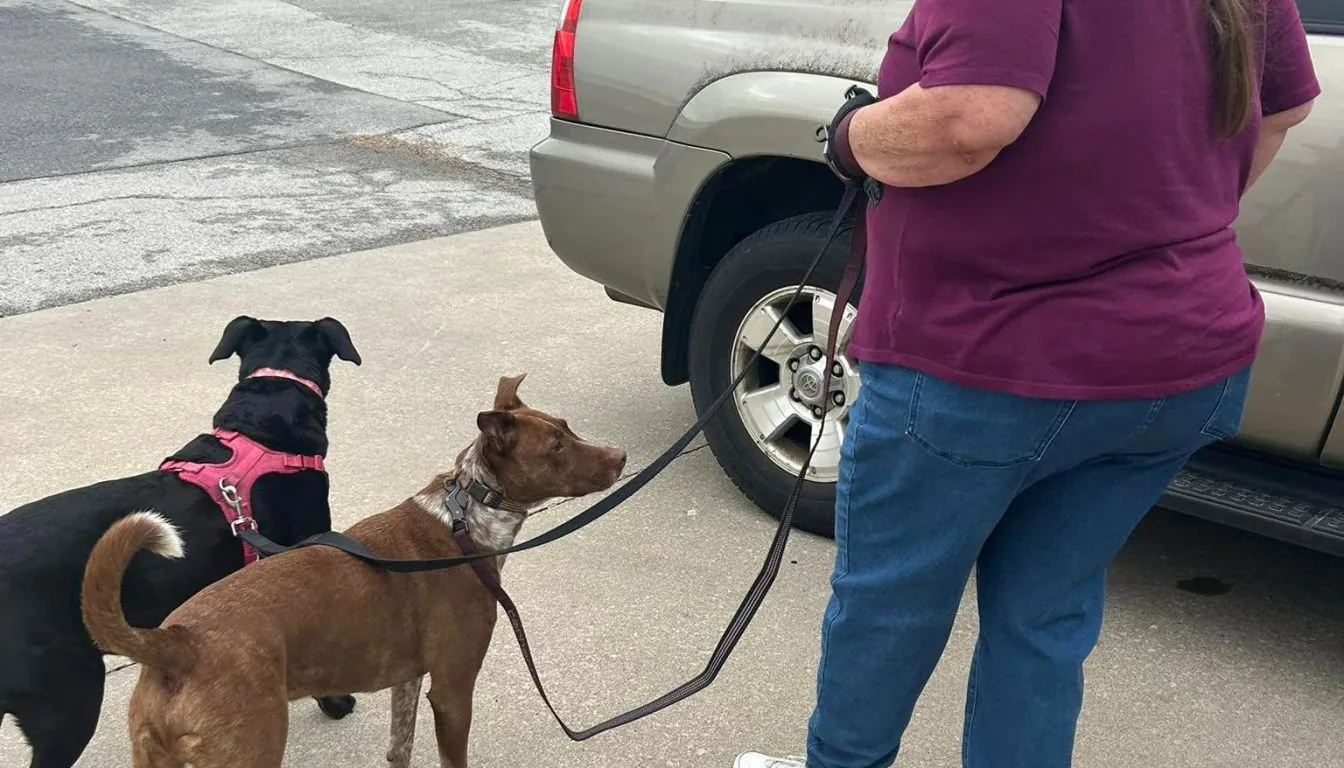
5. Rushing the Process (and Expecting Perfection)
CGC training is a journey, not a sprint. One of the biggest mistakes owners make is rushing the process—expecting their dog to master every skill in a few weeks. Training under pressure can cause stress, frustration, and regression.
Every dog learns at a different pace. Some may breeze through polite greetings but struggle with supervised separation. Others may nail the “sit-stay” but get overly excited around other dogs. Pushing too hard or comparing your dog’s progress to others can backfire.
What to Do Instead
Set realistic goals. Focus on consistency over speed.
Celebrate small wins—like staying calm around a jogger or walking nicely for a few steps longer than last time. Training should be enjoyable, not stressful.
Discuss your dog’s progress with the trainer and decide what to work on next. Readiness is more useful than a fixed deadline.
Bonus Tip: Forgetting the “Good Citizen” Beyond the Test
Even after your dog earns their CGC certificate, the work isn’t over. One common oversight is treating the certification as an endpoint rather than a beginning.
The CGC title represents a commitment—to ongoing training, responsibility, and community-minded ownership. Dogs, like humans, need regular reinforcement and continued experiences to stay well-mannered and confident.
Keep the Momentum Going
- Continue practicing CGC skills in everyday life—during walks, visits, and playtime.
- Enroll in advanced classes or explore therapy dog certification.
- Reinforce calm behavior and polite manners regularly.
You can discuss the available classes with the team when choosing a next step. Confirm any advanced course or therapy-work pathway with the organization that offers it.
How Howliday Pet Resort Helps You Succeed
Explore our Canine Good Citizen class or private lessons. Training is led by our partners at Standing Obeytion Dog Training. Call (417) 771-5221 to discuss readiness, class dates, methods, fees and evaluation arrangements.
Final Thoughts
Keep the five priorities in view: basic skills, suitable practice settings, preparation for test conditions, clear handling and a realistic pace. Use the AKC test descriptions to check what the evaluator will ask for, and continue practicing useful manners after the test.